

US markets suffered a sharp drop this week, with major indices tumbling as post-election jitters rippled across trading desks.


Headwinds stemmed primarily from US midterm results, where prospects of Democrats controlling both chambers of Congress sparked fresh anxieties over tightened regulation - particularly targeting the high-flying AI engine that has driven so much index momentum.
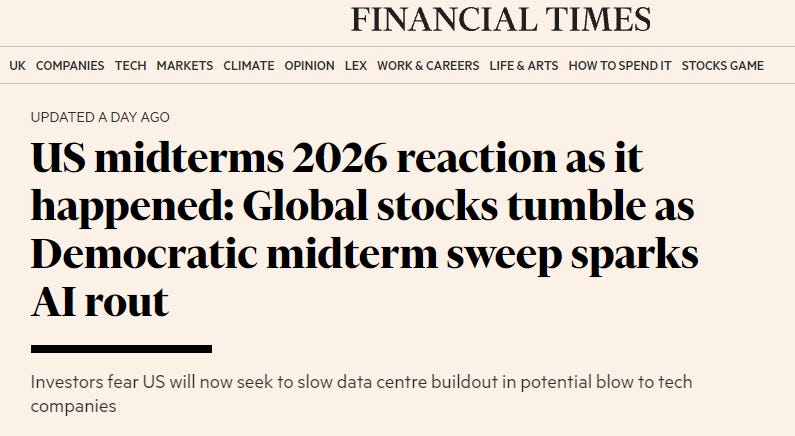
Financial headlines quickly pivoted to familiar panic: “Nowhere to hide.”
Regular BREAKINGWATERS readers know better. When you avoid over-reliance on a single geographic market or concentrated narrative, market dislocations become an opportunity, not a problem.
Big Tech & Semis: Caught in the AI Crosscurrents
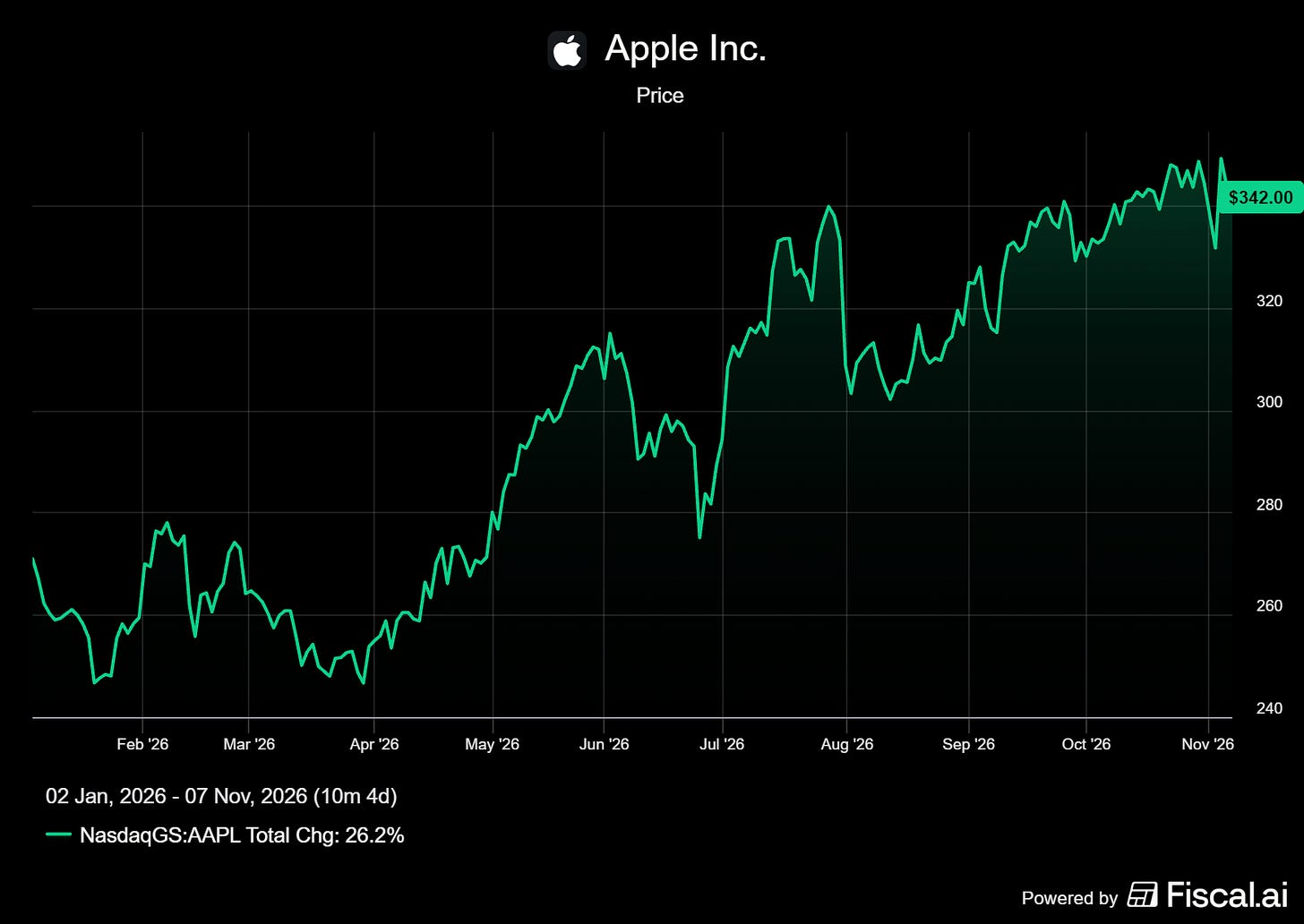
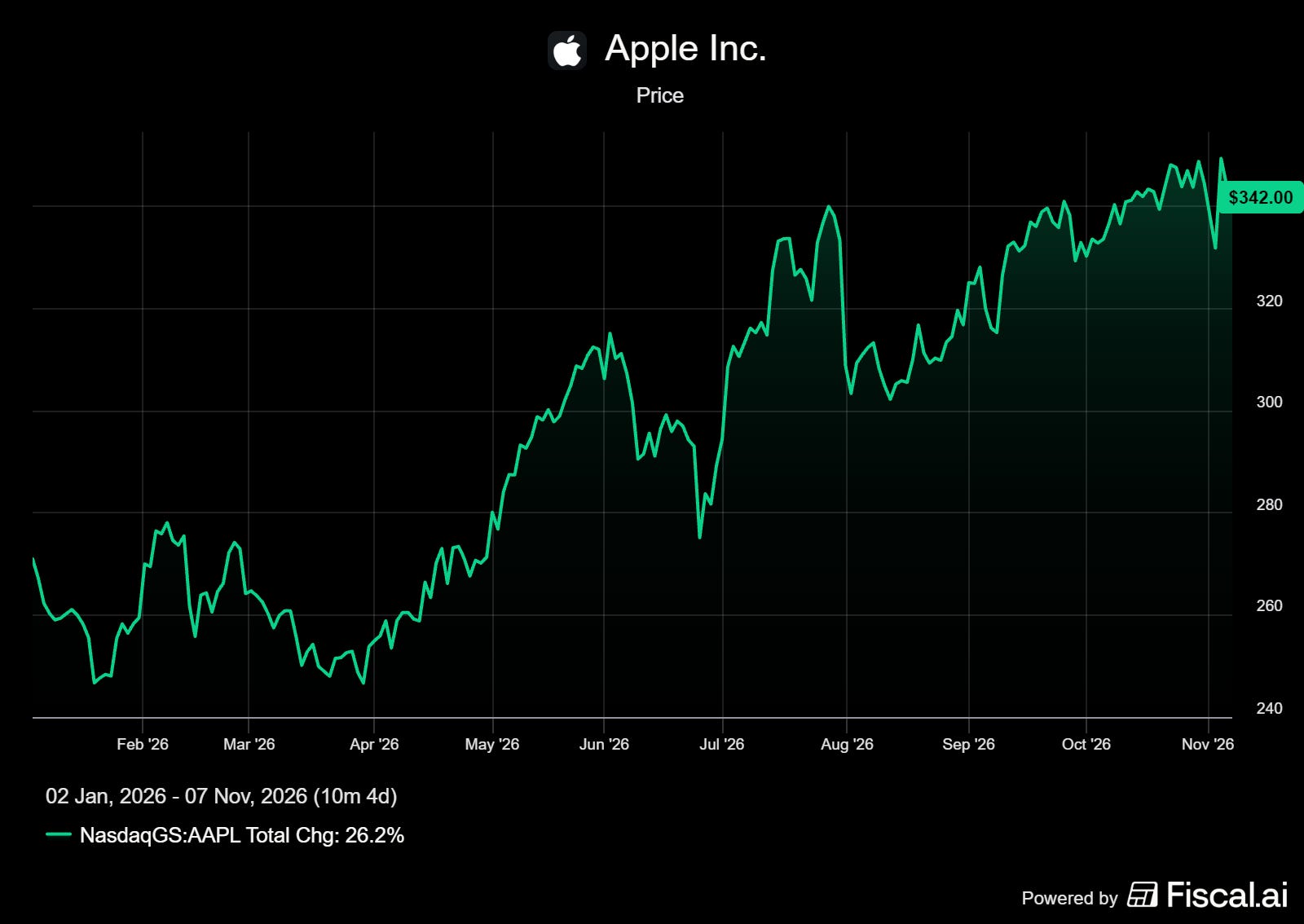
Apple ($AAPL): Delivered solid headline numbers - revenue rose ~12% and EPS grew ~5%, driven by resilient iPhone, Mac, and services demand. However, the stock dropped roughly 6%. Gross margins contracted modestly, and management issued cautious forward guidance for the fourth quarter, citing memory supply constraints and higher manufacturing input costs.
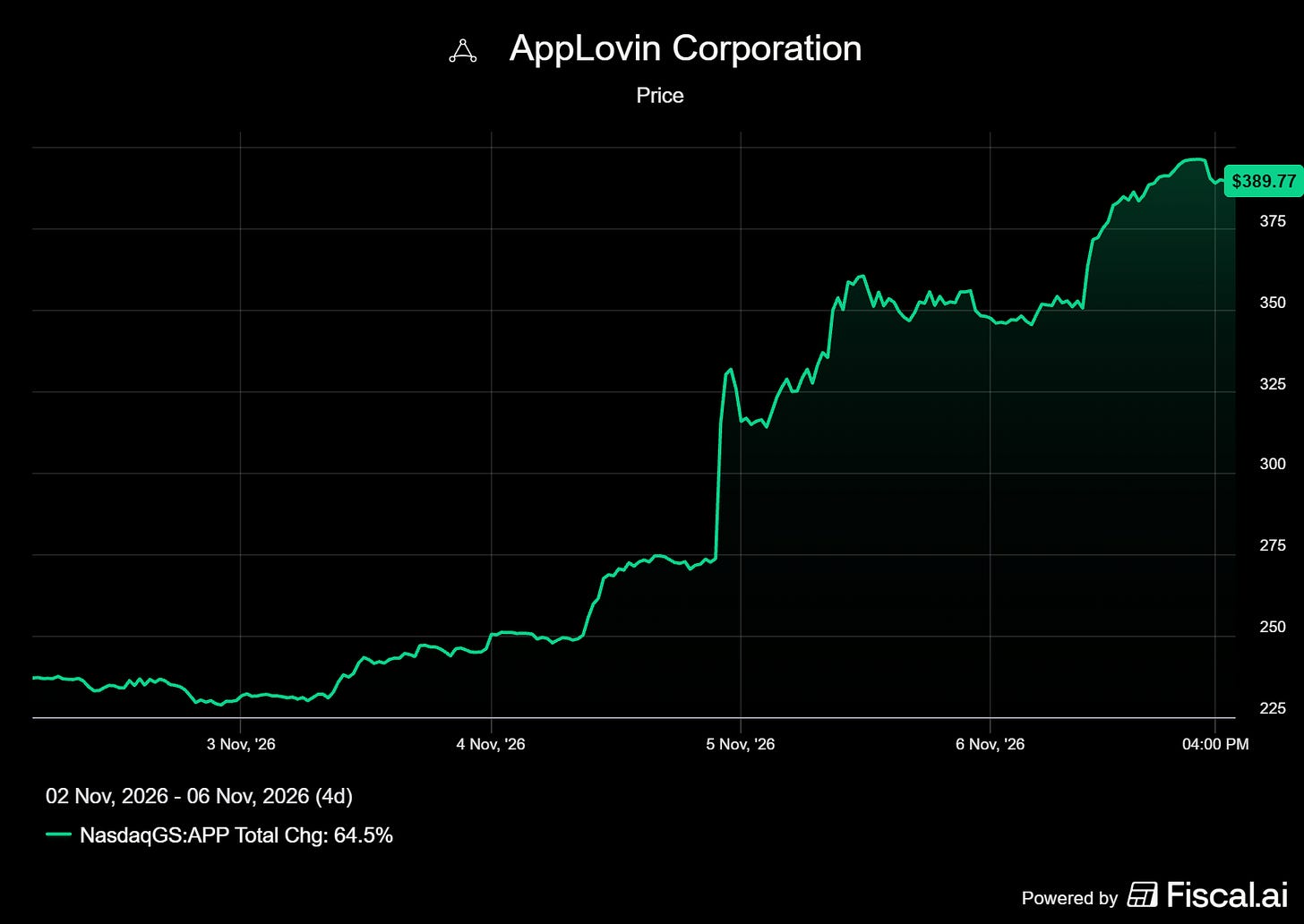
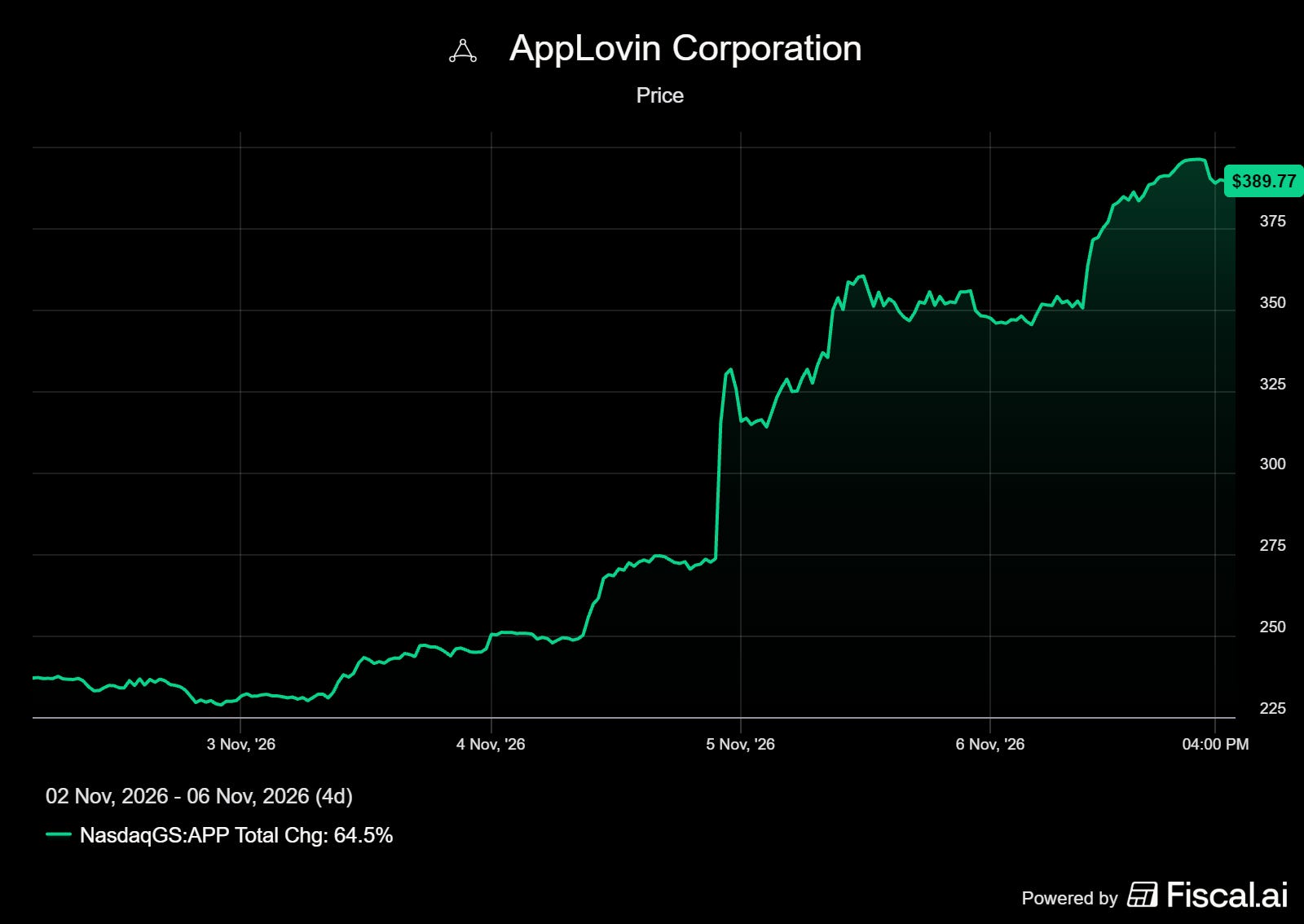
AppLovin ($APP): Following significant historical volatility, AppLovin posted a massive quarter. Revenue surged 55% powered by rapid AI integration across its advertising software triggering a 31% share price rally, 65% over 5 days. As a high-beta stock, it continues to reward strong operating leverage aggressively.
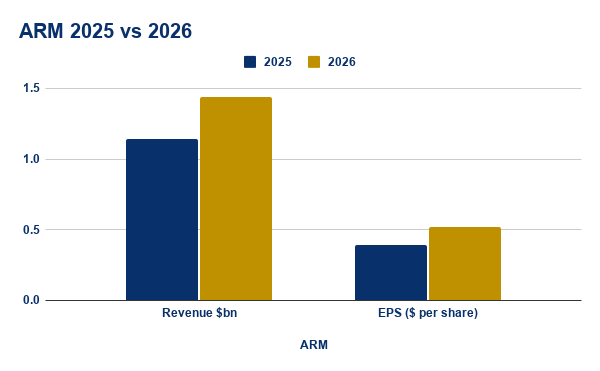
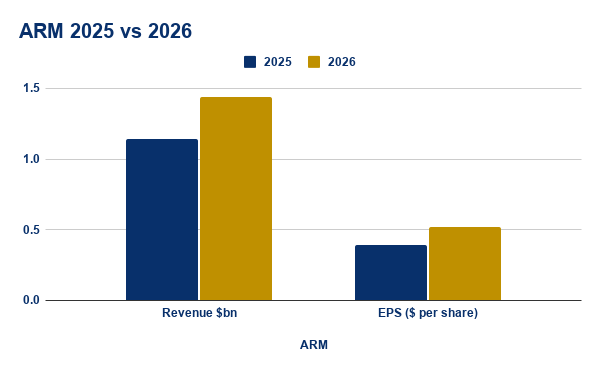
Arm Holdings ($ARM): Benefited directly from surging AI data center demand, growing revenues by 27% and beating expectations. Despite operational momentum, the stock was caught in broader semiconductor sector weakness and tumbled 12%.
Qualcomm ($QCOM): Added pressure to chip sentiment after missing earnings estimates and issuing downbeat Q4 guidance, driving its shares lower.
The Consumer Divide: Mass Market Fatigue vs. Ultra-Luxury Pricing Power
McDonald’s ($MCD): A quintessential economic bellwether. While profit exceeded expectations, top-line revenue lagged, edging up just 1%. Crucially, US organic sales declined 0.2% - echoing recent trends seen in PepsiCo ($PEP). Persistent cumulative inflation appears to be pressuring the lower-to-middle income US consumer, even as international divisions display comparatively stronger resilience.
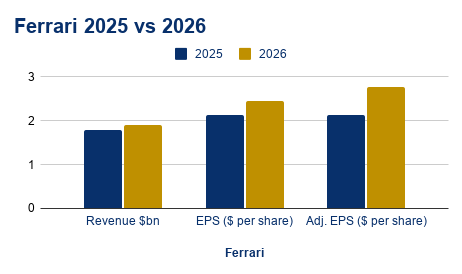
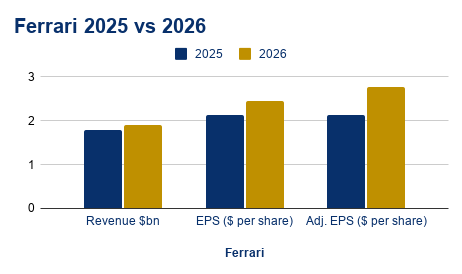
Ferrari ($RACE): On the opposite end of the discretionary spectrum, the luxury automaker beat earnings, raised full-year guidance, and trended higher. The driver remains ultra-high-margin bespoke customizations and personalization programs, where demand remains largely indifferent to broader macroeconomic strain.
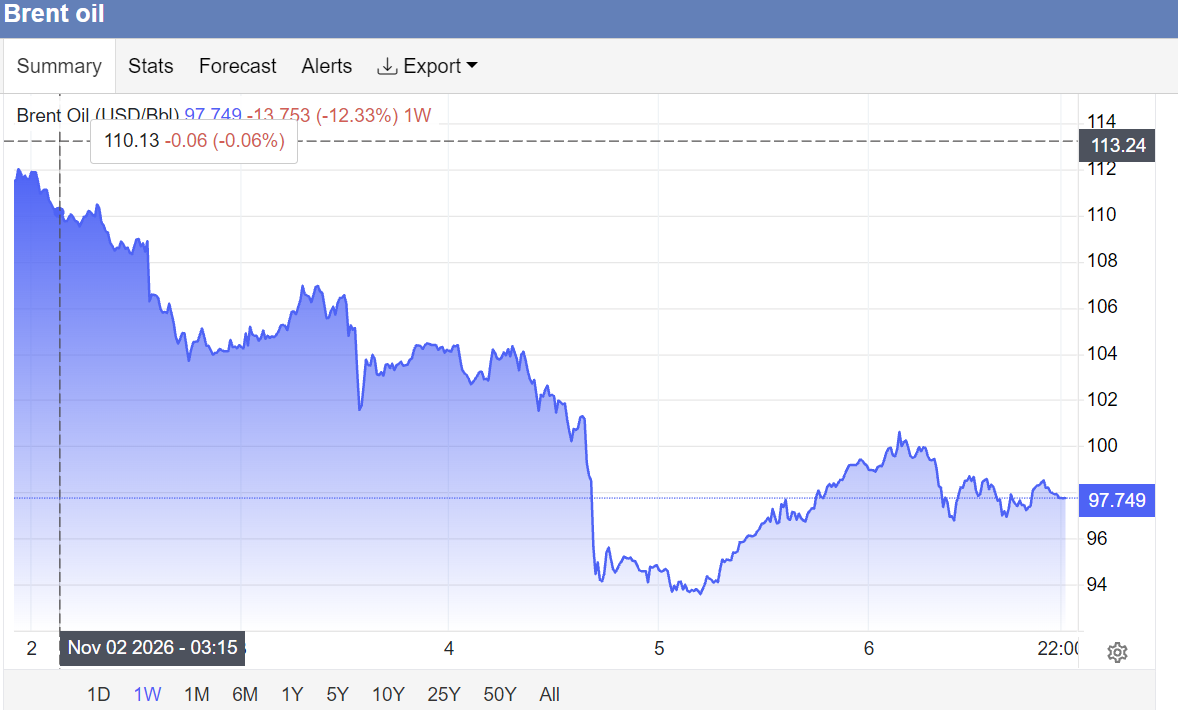
Ryanair ($RYAAY): Revenue climbed 9% (composed of 60% passenger traffic volume growth and 40% higher average fares). Despite an earnings miss due to higher operating cost pressures, shares gained 2% as forward passenger targets were revised upward. The airline also stands to benefit from falling crude oil prices spurred both by US political shifts and diplomatic discussions brokered by Qatar.
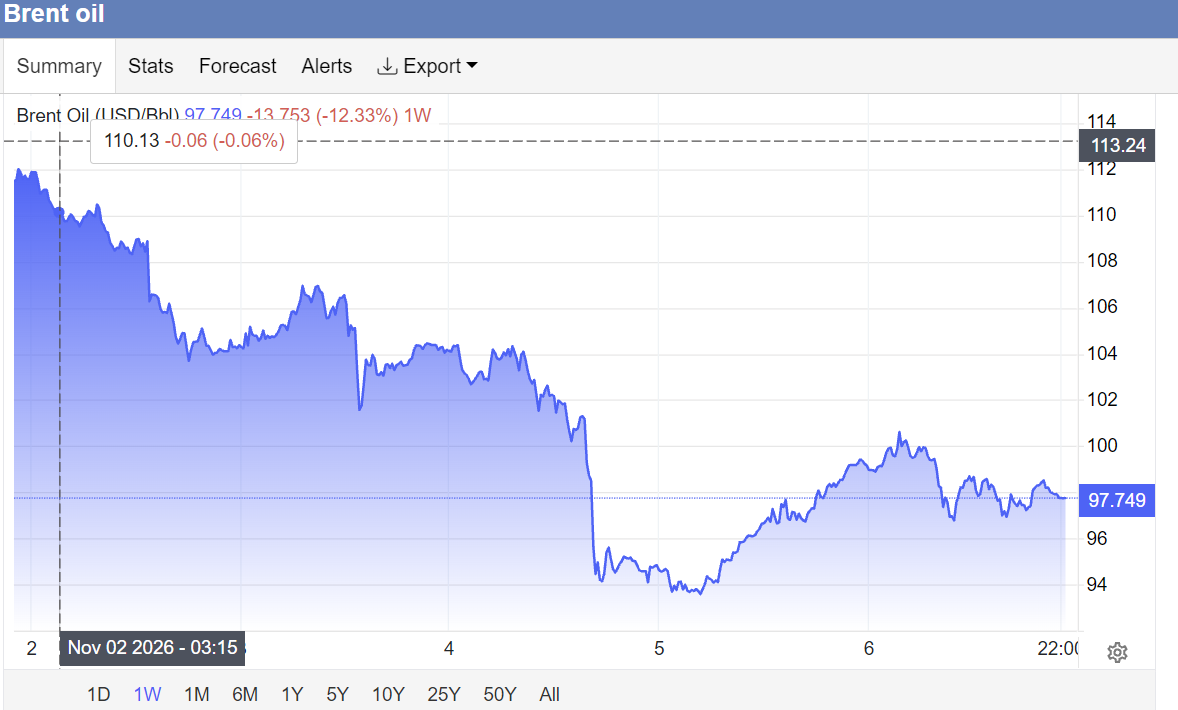
source: trading economics
Healthcare
Pfizer ($PFE): Beat quarterly estimates and lifted guidance, yet shares drifted lower as investors remained focused on impending patent expirations and exclusivity losses across core pharmaceutical lines.
Amgen ($AMGN): Cleared hurdles on both revenue and earnings while raising full-year outlook, sending the stock up 6%.
The Macro Perspective: Regulation and Opportunity
While political shifts inevitably spark immediate knee-jerk selling over potential regulatory friction, long-term empirical evidence rarely shows that regulation permanently degrades aggregate corporate earnings. Resilient companies consistently adapt, optimizing operational efficiencies, passing on unavoidable costs, and aligning business models with evolving stakeholder standards.
More importantly, market divergence reminds us to look beyond the US
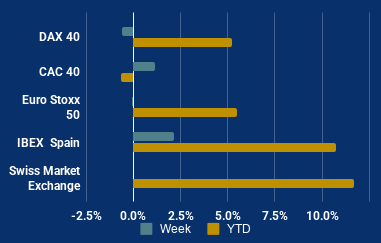
We are actively reviewing beaten-down valuations to identify where fundamental disconnects offer attractive entry points.
Investor Glossary
Beta: A statistical measure comparing a stock’s volatility relative to the broader market. A high-beta stock moves more aggressively than the benchmark index in both upward and downward swings.
Earnings Beat / Miss: A scenario where reported earnings per share (EPS) come in higher (beat) or lower (miss) than consensus Wall Street analyst projections.
EPS (Earnings Per Share): Net income divided by available common shares outstanding; a core measure of corporate profitability.
Guidance: Official forward-looking projections issued by corporate management regarding future sales, profit margins, and operational costs.
Margin Contraction: A decrease in the ratio of profit to revenue, indicating higher costs of production, supply bottlenecks, or reduced pricing leverage.
Organic Growth: Revenue growth achieved through existing operations and direct output expansion, excluding acquisitions or currency fluctuations.
Patent Exclusivity: Legal protection granting a pharmaceutical developer monopoly production rights for a drug before generic competitors enter the market.


