

Bonjour mes amis.
A slightly different backdrop this week for How the Wave Broke, but global markets remains as fast-moving as ever.
Over the past fortnight, earnings season has high volume. Between spiraling artificial intelligence infrastructure spend, contrasting consumer signals, and geopolitical tailwinds in commodities, investors are working hard to shape the picture.
Let’s unpack how the wave broke:
1. The Big Tech Capex Conundrum: Vision vs. Free Cash Flow
The prevailing narrative across Silicon Valley right now is defined by aggressive capital allocation into AI infrastructure and public equity markets are beginning to penalize unbridled spending.
Meta META 0.00%↑ : Delivered solid top-line revenue growth of 26%, guiding toward record annual revenues of $73B–$76B. The core advertising cash engine is alive and kicking. However, the market’s attention fixated entirely on capital expenditures. Meta is guiding capex toward ~$140 billion annually, equivalent to 2x annual revenues. The central debate for investors: is this going to be a multi-billion-dollar boondoggle?
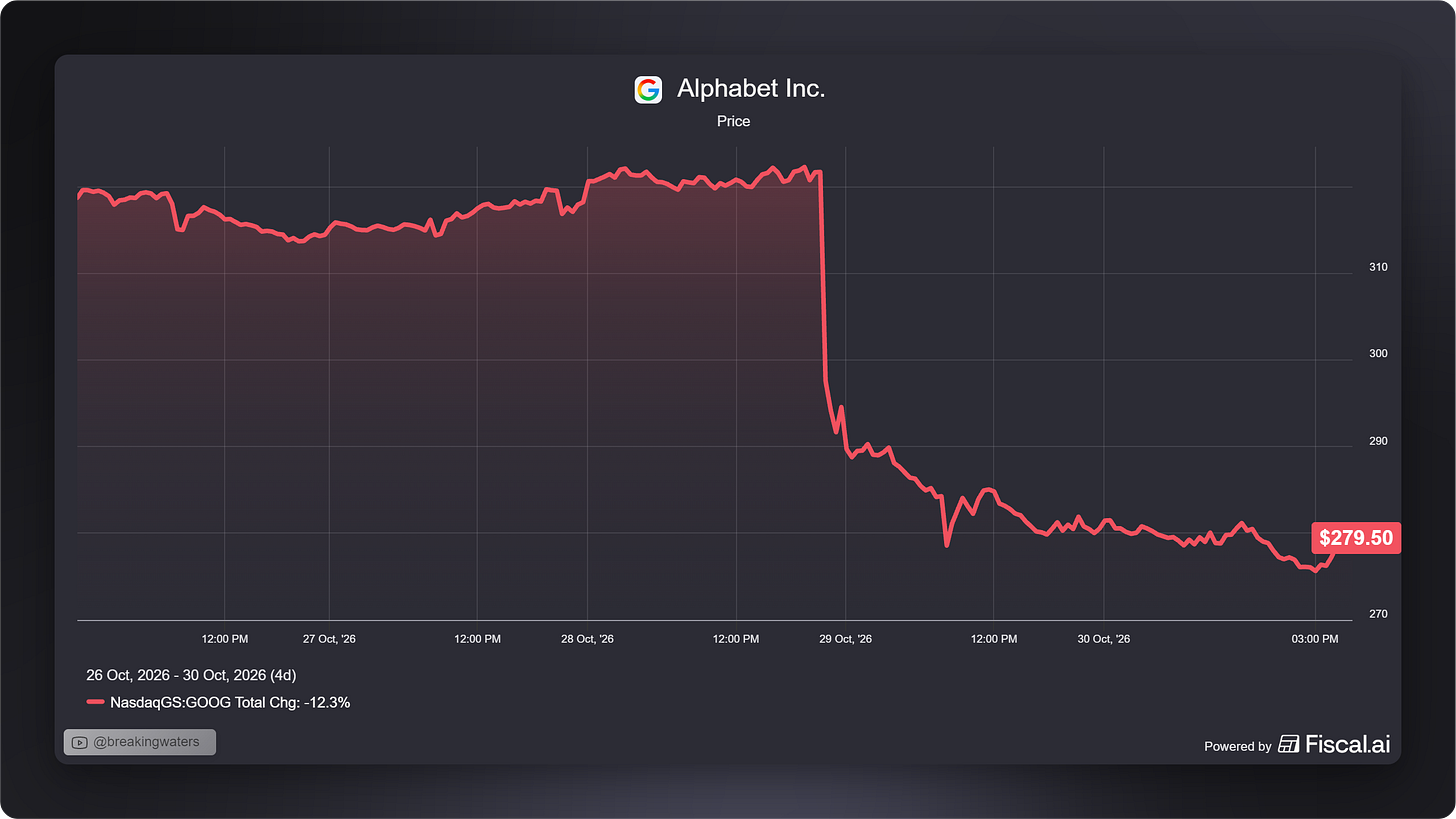
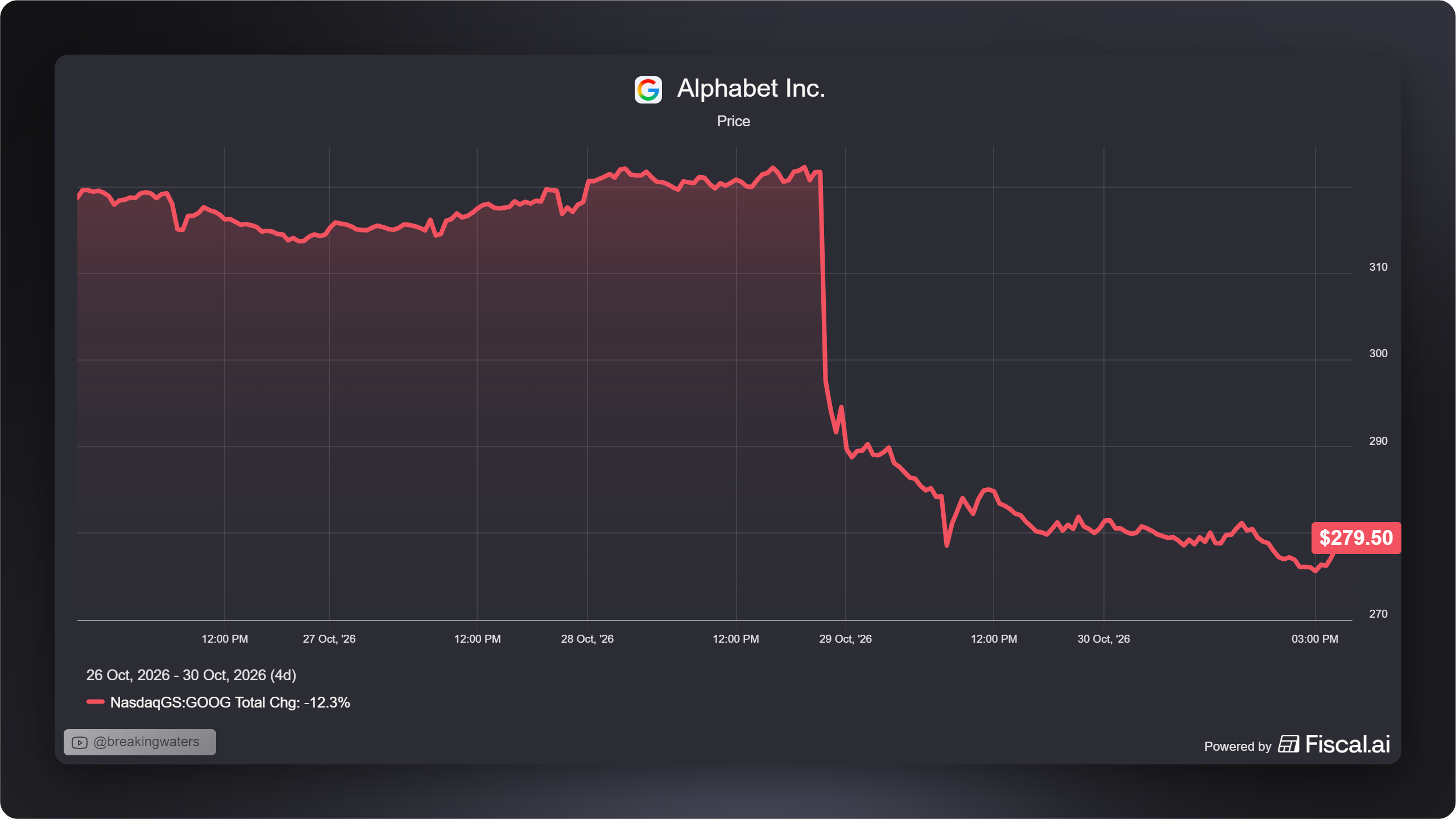
Alphabet (Google) GOOGL 0.00%↑ : Shares slid roughly 12% following missed estimates and renewed anxieties that conversational AI search interfaces may cannibalize its legacy, high-margin ad business.
Microsoft MSFT 0.00%↑ : Delivered a clean beat on both top and bottom lines, anchored by relentless demand for Azure. Microsoft remains the notable outlier among mega-cap hyperscalers, continuing to generate positive free cash flow despite heightened capex cycles.
Amazon AMZN 0.00%↑ : The equity pulled back around 7% post-print. While AWS expanded at an impressive ~39–40% annualized clip, softer-than-expected retail e-commerce growth weighed heavily on broader sentiment.
Tesla TSLA 0.00%↑ : Reported largely flat revenues and deteriorating earnings per share. Heavy capital outlays continue to pour into autonomous computing clusters, AI development, and the Optimus humanoid robotics program. The recent Roadster showcase had little affect on the share price.
2. Digital Media & Entertainment: Monetizing the Base
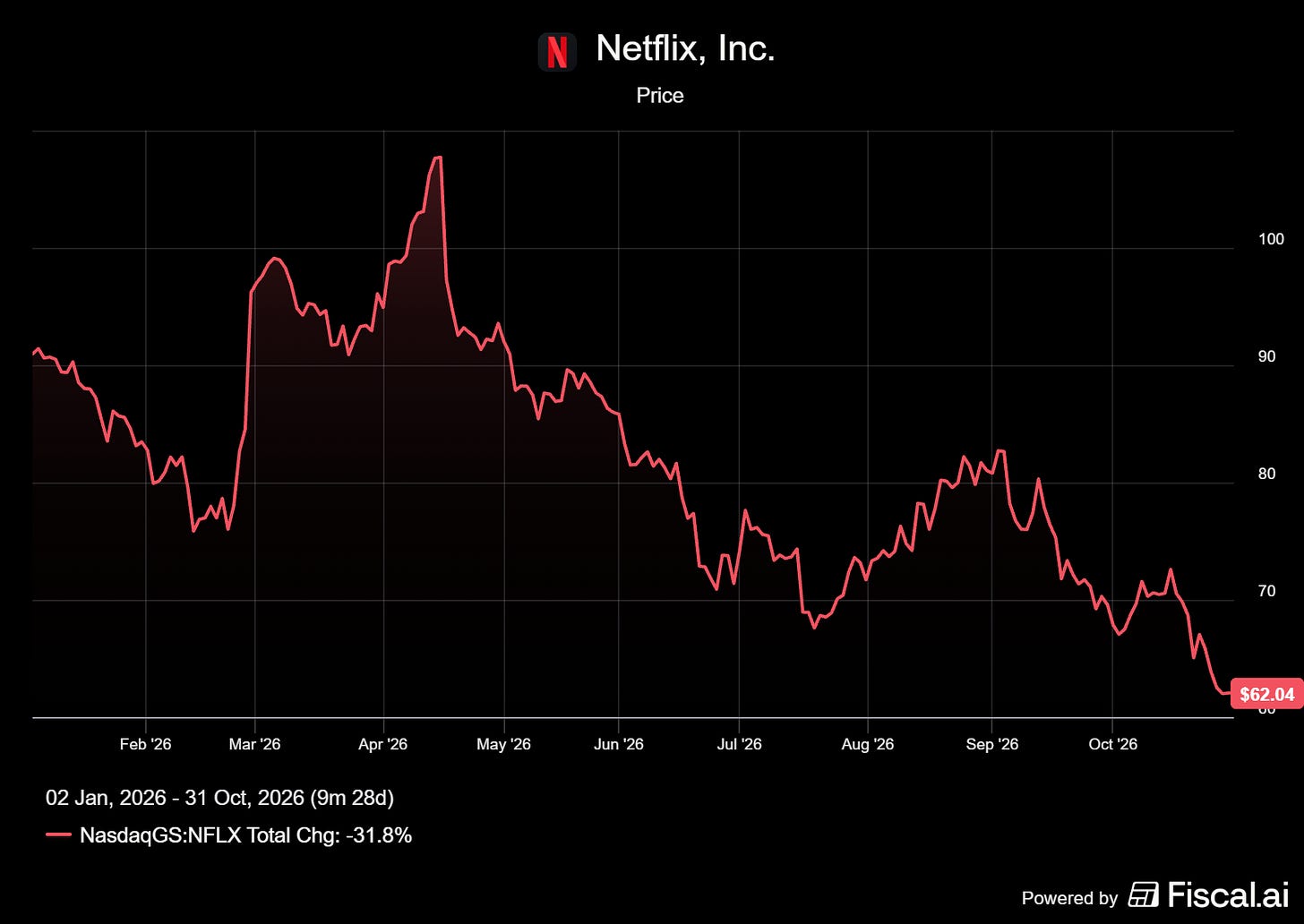
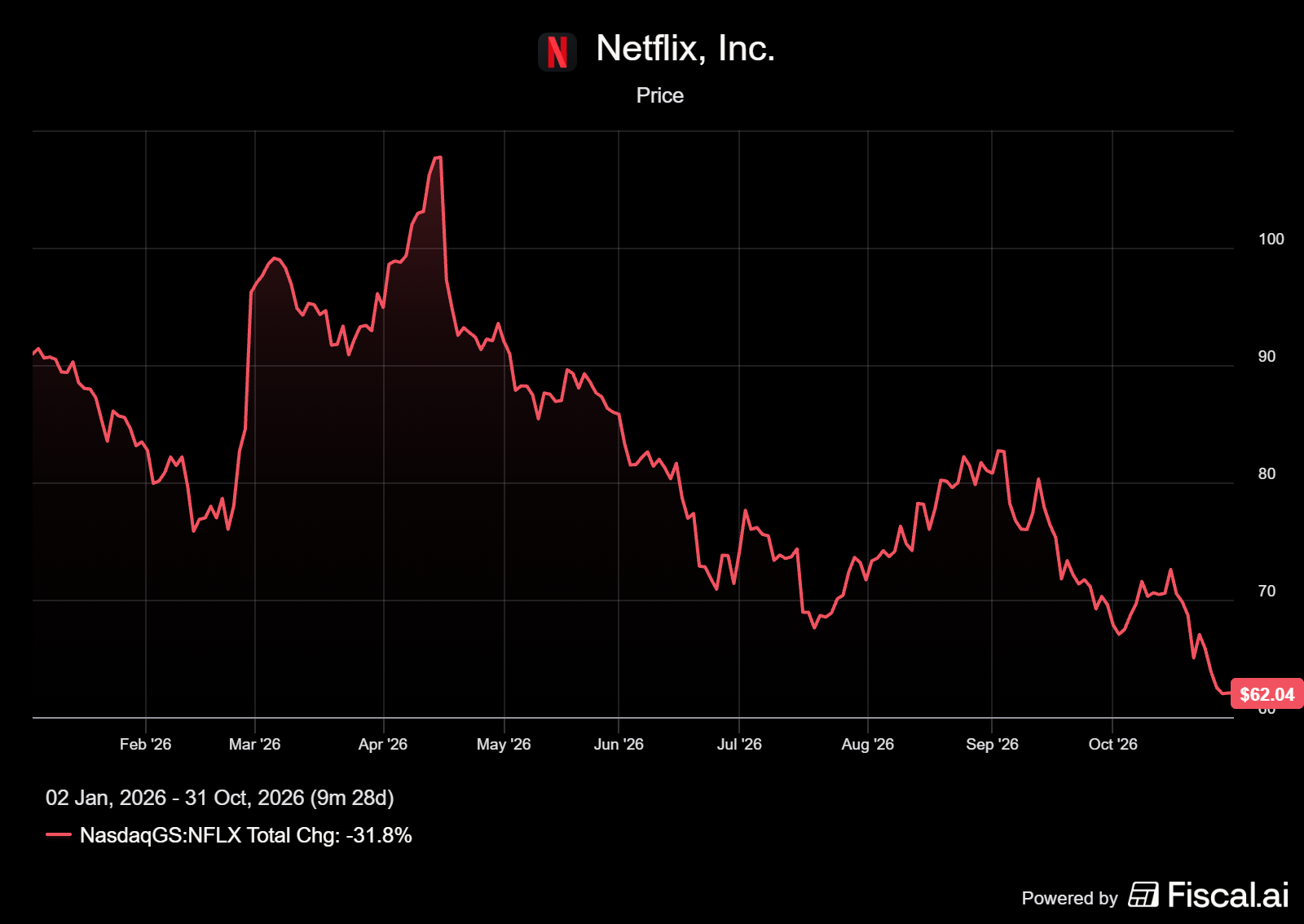
Netflix NFLX 0.00%↑ : Put forward a disciplined operational quarter, with revenues guiding to be up 13% and earnings per share advancing 47%. Operational leverage continues to improve as lower-priced, ad-supported tiers scale globally. While the stock remains down roughly 30% year-to-date with market participants debating long-term subscriber terminal velocity, Netflix has before navigated strategic pivots and proved consensus wrong.
3. The Real Economy: Consumer Spending & Cross-Border Velocity
Is the global consumer buckling or adapting? Recent prints present a nuanced, bifurcated picture:
Payment Networks (Visa V 0.00%↑ & Mastercard MA 0.00%↑ ): Posted double-digit expansion across payment volume and net revenues. Visa grew revenues by 13% and Mastercard by 14%, with Mastercard expanding EPS over 20%. Growth was driven by resilient domestic spending in the United States and high-margin cross-border travel volume. This strength stands in contrast to recent weakness reported by staple consumer giants like PepsiCo, highlighting that transaction volumes remain healthy even if unit basket volumes shift.
Coca-Cola KO 0.00%↑ : Shares are up approximately 30% year-to-date, benefiting from defensive portfolio rotation into consumer staples alongside strong fundamental execution. Organic revenue climbed on the back of a 7% expansion in beverage concentrate sales, reinforcing the pricing power inherent in their legacy distribution moats.
4. Healthcare & GLP-1 Adoption
Eli Lilly LLY 0.00%↑ : Revenue surged 39%, accompanied by sharp earnings expansion driven by relentless prescription volume for Mounjaro and Zepbound. The demand trajectory for metabolic therapeutics remains exceptionally robust, sending shares up ~30% year-to-date.
Novartis : Posted top-line expansion of 4%, but net profitability was impaired by a significant clinical asset impairment write-down following a failed pipeline trial.
5. Macro Backdrop: Energy Volatility and Sticky Inflation
Energy as a Portfolio Buffer: As highlighted in our early September strategy note (“Long Pumpkins, Short Ice Cream”), we cannot predict geopolitical flashpoints, but portfolio volatility was very likely to remain elevated. TotalEnergies TTE 0.00%↑ posted revenue growth of 40.6% on the back of Middle Eastern geopolitical tension. Up roughly 40% year-to-date, energy equities continue to prove their worth as a structural hedge.
Inflation Stagnation: Consumer price index readings in the United States and the United Kingdom printed 0.1% above consensus expectations, remaining stubbornly above 3%. Canada also sits north of the 3% threshold, while Japan was the sole developed market tracking closer to central bank targets at approximately 2%. The final mile of global disinflation remains distinctly uneven.
Community & What’s Next at BREAKINGWATERS
Book Club Discussion (Friday, November 6th): We are reading Brett Gardner’s Buffett’s Early Investments - an exceptional study blending corporate history with Warren Buffett’s early capital allocation framework. Join us for a live conversation with Brett.
Webinar (Friday, November 13th): A deep dive into modern biotechnology with Mark Dainty and Paulina Suker of the Blue Box Precision Medicine Fund.
Recent Post: If you missed it, make sure to read “Let Them Eat CAC”, examining the structural decoupling of France’s CAC 40 index from domestic political turbulence.
Thank you for tuning in / reading along, and enjoy the rest of your weekend.
Glossary of Financial Terms
Capex (Capital Expenditures): Funds allocated by a company to acquire, upgrade, and maintain physical assets such as data centers, chips, factories, or real estate.
ROI (Return on Investment): A profitability metric evaluating the net financial gain generated from an investment relative to its initial cost.
EPS (Earnings Per Share): A company’s net profit divided by the total number of common shares outstanding, serving as an indicator of profitability.
Hyperscaler: Large-scale cloud service and data providers (e.g., Microsoft Azure, Amazon AWS, Google Cloud) capable of providing massive computing infrastructure.
Free Cash Flow (FCF): The operational cash a company retains after subtracting working capital needs and capital expenditures; key for funding dividends, buybacks, or debt retirement.
Hedge: An investment position established to offset potential losses in companion holdings during market drawdowns or volatility spikes.
Cross-Border Transactions: Payment processing that occurs when the merchant and consumer payment cards are registered in different countries, typically carrying higher processing margins.
GLP-1 (Glucagon-Like Peptide-1): A class of therapeutic medications originally engineered for type 2 diabetes that have seen widespread adoption for clinical weight loss and metabolic care.
Write-down / Impairment: An accounting reduction in the book value of an asset when its fair market value permanently drops below balance-sheet carrying value.
Organic Growth: Revenue growth achieved via operational expansion and higher sales volume/pricing, excluding mergers, acquisitions, or foreign exchange currency fluctuations.


