


Thanks to Deepti Goyal for leading on this article.
2026 - A DIFFICULT YTD FOR THE NIFTY FIFTY
The Indian equity market has had a difficult year, down 15% ytd at its lowest point in early October. Recent developments however, point to a turning tide which has seen the market begin to rally.
The outcome of the US midterm elections could have provided a major tailwind too by the indirect effect of raising the chances of a resolution to the Middle East conflict which, in turn, would see oil prices fall.
The Nifty 50 Index was down 13.4% year-to-date as of 30 September 2026. In early October, the index staged a recovery rally, gaining 12.2% since its September close and narrowing the year-to-date return to 2.9%.
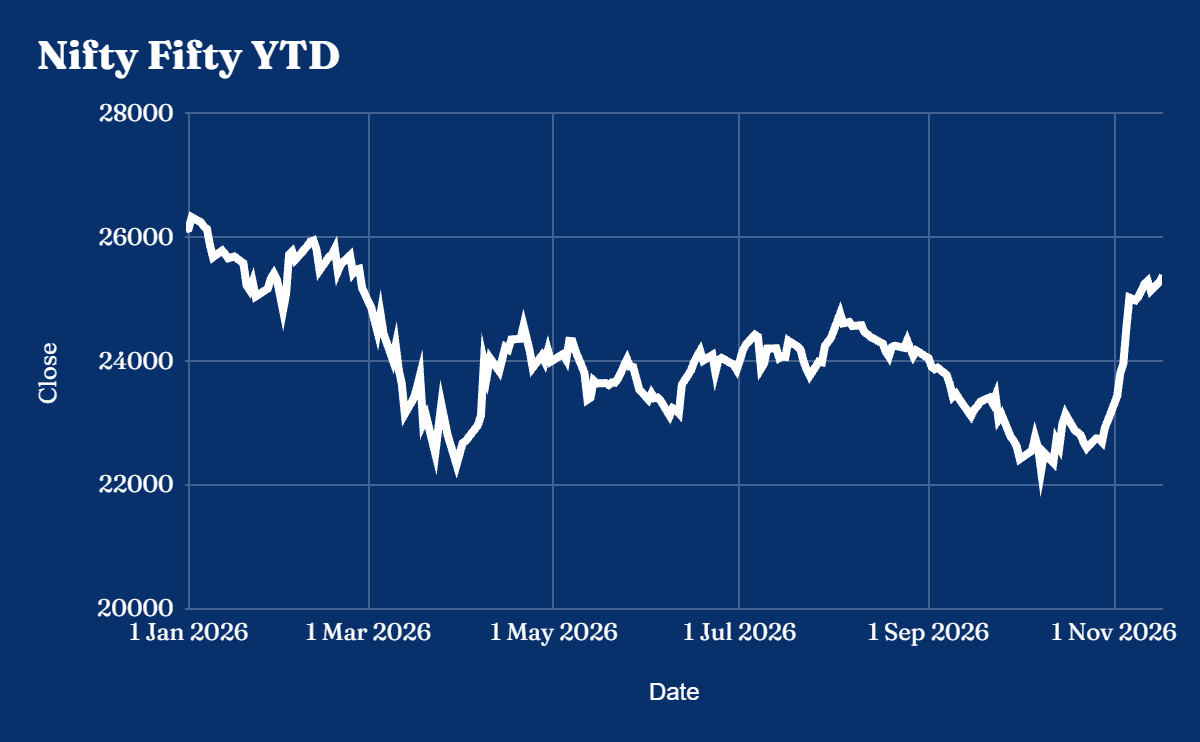
Source: niftyindices.com
The rebound has been supported by declining oil prices, a broadening of investor interest beyond US technology stocks and more attractive valuations following the market correction. These factors could continue to work in India’s favour over the near term.
With earnings forecast to grow 16 - 17% over the next 12 months and the Nifty trading at a trailing price-to-earnings (P/E) multiple of approximately 20.5x, India is beginning to look more compelling from an asset allocation perspective.
To assess whether the recent recovery is sustainable, it is worth examining the three principal factors behind India’s underperformance this year.

1. The Oil Shock: A Significant Headwind for India’s Economy
India is a net importer of oil, with crude petroleum and petroleum products historically accounting for roughly a quarter of its goods imports. This makes the economy particularly vulnerable to disruptions in global energy markets.
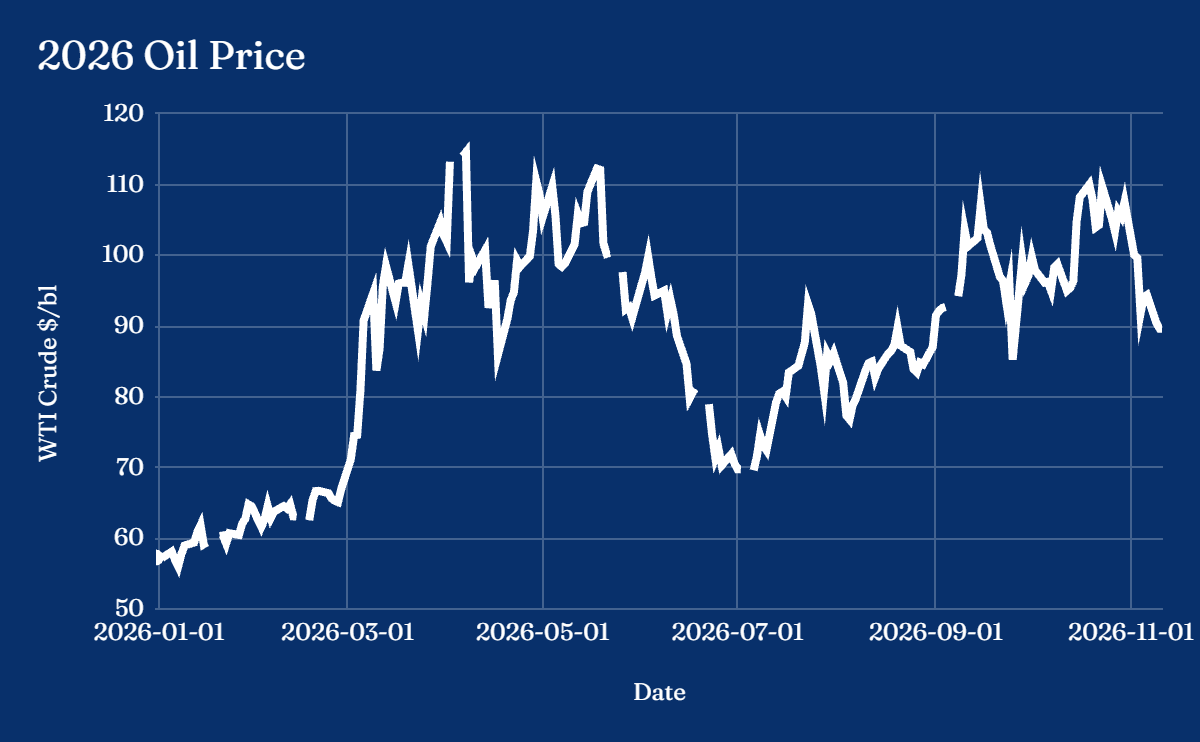
Source: St. Louis Fed data
Before the US and Israel launched strikes on Iran on 28 February 2026, approximately 40% of India’s crude oil imports passed through the Strait of Hormuz. This represented around two million barrels per day out of total imports of five million barrels.
The disruption to energy markets had significant economic consequences for India in particular. Brent crude spot prices rose 68.5% between 27 February and 30 October, while India’s net oil and gas import bill increased by an estimated $20.9 billion year-on-year to $81.1 billion during April - September.
The government responded with measures designed to cushion the impact on households and businesses. In March, central excise duty on petrol was reduced from ₹13 to ₹3 per litre, while the duty on diesel was cut from ₹10 to zero. Additional fertiliser subsidies were also committed to protect the agricultural sector from rising input costs.
Although necessary to support the economy, these measures have placed pressure on public finances. Current estimates suggest that India’s fiscal deficit could rise to 4.7% of GDP in FY2026–27, compared with the government’s budgeted target of 4.3%, even as GDP is estimated to grow 7.2%.
However, the decline in oil prices since late October could mark an important turning point. If sustained, lower energy prices would ease pressure on India’s import bill, inflation and government finances, potentially reducing the risk of further fiscal deterioration.
2. Limited Exposure to the AI Investment Boom
A second factor behind India’s relative underperformance has been the composition of its equity market.
India’s stock market is predominantly domestically oriented, with IT services and pharmaceuticals among its principal export sectors. In contrast, markets such as Taiwan and South Korea offer investors more direct exposure to semiconductors, memory chips and the infrastructure supporting the global artificial intelligence investment boom.
As investor enthusiasm for AI-related companies intensified, these markets became natural beneficiaries of capital flows seeking exposure to the sector. India’s relatively limited participation in this investment theme likely saw investment move from India to these other, more directly exposed markets.
Equally, IT services and software make up a large part of the Indian market and these have been shunned by investors on the premise that AI will replace them. This thesis can be challenged as many of these companies are estimated to grow their revenue and earnings next year.
Outside of AI, India has nevertheless benefited from efforts by multinational manufacturers to diversify production away from China, albeit, progress has been gradual.
While India offers attractive structural growth opportunities, its equity market has not been a major direct beneficiary of the AI-driven investment cycle that has dominated global equity performance. As sentiment for AI investments recalibrates, India has the potential to benefit.
3. High Starting Valuations and Foreign Investor Selling
The third factor has been valuation.
The Nifty 50 entered 2026 trading at approximately 22.8 times earnings, above its five-year historical average. This left the market vulnerable to a correction as the economic outlook deteriorated and global investors increasingly favoured markets offering more direct exposure to AI-related growth.
By late October, the index’s P/E multiple had declined to approximately 19x, bringing valuations closer to the lower end of their five-year historical range.
Nifty 50 PE History - Click to enlarge
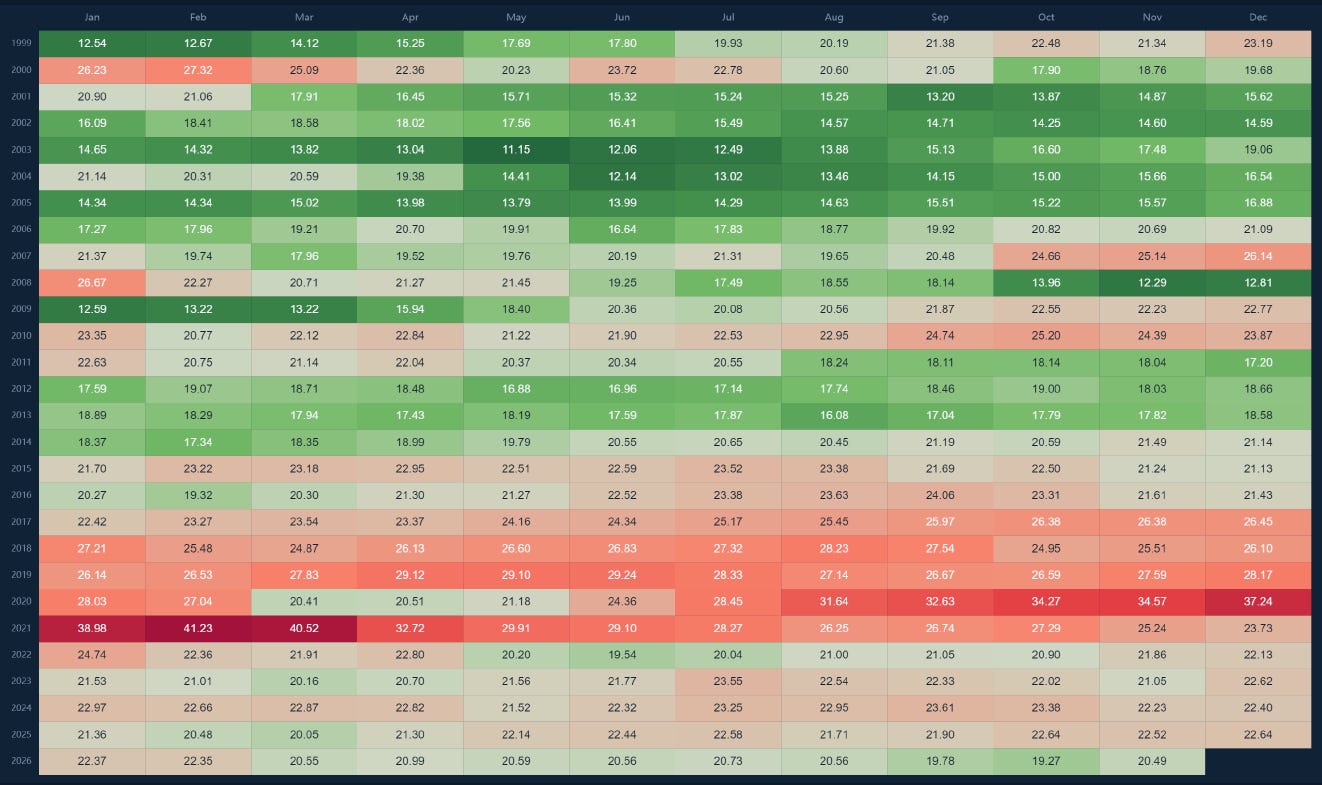
Source: nifty-pe-ratio.com
The adjustment has been particularly pronounced among some of India’s largest companies. HDFC Bank, for example, saw its earnings multiple decline from above 21x to below 15x. This reflected a combination of company-specific concerns and reduced foreign institutional ownership, which now stands at approximately 39%.
The market correction has therefore been driven not only by concerns over economic growth and corporate earnings, but also by a reassessment of the premium investors have historically been willing to pay for exposure to India. The outlook is better now than the start of the year in many ways, yet the market is trading at c.20.7x P/E, cheaper than at the start of the year, even after a recent rally.
What Could Drive a Sustained Recovery?
The recent US midterm elections may have introduced an additional catalyst for India’s recovery. The decline in Brent crude prices following the elections suggests that investors may be assigning a greater probability to negotiations aimed at de-escalating the conflict with Iran.
For India, a sustained reduction in oil prices would be particularly beneficial. It would improve the country’s external position, reduce inflationary pressures and provide some relief to government finances. Collectively, these developments could support corporate profitability and improve investor sentiment.
A second potential catalyst is a broadening of global equity market leadership beyond AI infrastructure.
The extraordinary investment in AI-related infrastructure has concentrated investor attention and capital in a relatively narrow group of sectors and markets. However, concerns over the scale and returns on this investment are beginning to attract greater scrutiny. Local votes against data-centre expansion in the US have also highlighted growing political resistance, although it remains too early to determine whether this will materially affect investment plans.
Should investors begin to diversify away from the AI infrastructure trade, markets such as India could benefit from renewed capital inflows, particularly given their exposure to domestic consumption, financial services and other sectors driven by local economic growth.
Is India Becoming Attractive Again?
The investment case for India has improved considerably since the start of the year.
The Nifty 50 is now trading at below 20x one-year forward earnings, against expected earnings growth of approximately 16 to 17% over the next 12 months. This implies a price/earnings-to-growth (PEG) ratio of just over 1x, making valuations more reasonable relative to the market’s earnings growth prospects.
Importantly, this comes at a time when valuations are near five-year lows and some of the external pressures that weighed on the economy earlier in the year appear to be easing.
India also offers investors exposure to a large, domestically oriented, young, technology savvy economy whose growth drivers are less directly dependent on the global AI investment cycle.
Much will depend on the direction of oil prices, the stability of corporate earnings forecasts and the return of foreign institutional capital. A sustained improvement in these factors would strengthen the case for a further re-rating.
For investors considering their regional asset allocation, India now offers a more attractive combination of valuation and prospective earnings growth than it did at the beginning of 2026.
If you would like to arrange a discussion on any of the points raised in this article, please send me a dm or email at bryan@breakingwaters.com.